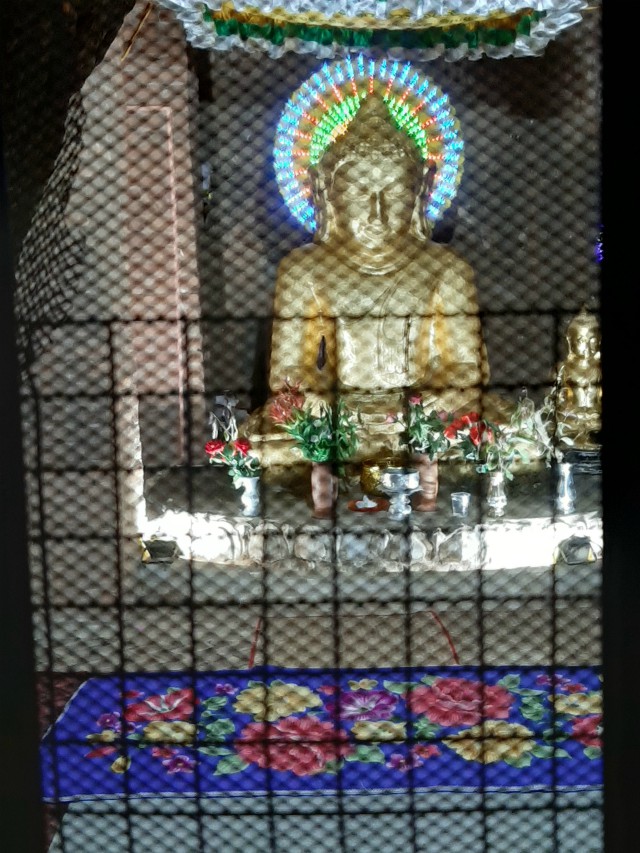
Manuha temple is one of the oldest temple in Bagan. Situated on the main road in Myinkaba village it houses four huge images of Buddha.


King Anawrahta wanted to spread Buddhism and requested a copy of Tripitaka from the Mon King, Makuta. Makuta refused and King Anawrahta invaded Thaton in 1057, defeated and captured the king. Makuta was thus the last king to rule Thaton.
He was taken to Bagan and imprisoned. Manuha was the name given to king Makuta after this.
Being in captivity was very depressing for the king and he wanted to gain Nirvana to get rid of all pains. He requested King Anawrahta if he could construct a temple as it was a normal practice for the kings to build a pagoda or temple at that time.
King Manuha had no money with him so he sold a precious jewel to a rich merchant in Myinkaba. With that money he constructed the temple in 1059.
The temple is named after him.
The east facing temple has three huge gold painted images of Buddha cramped in small rooms probably portraying the anguish, discomfort and agony the King underwent during his days of captivity.
 The building of temple is rectangular and is white in color. The first floor is a square structure on top. The edges of both floors are adorned with several small hti's all around.

 alms bowl with a ladder (see the man climbing it on the far side of the bowl)
 map taken from orientalarchitecture.com

 This is the central image and measures 46 feet high. The image is seen sitting in "Bhumisparsh mudra" with right hand touching the earth. All the images in this temple are too large for their rooms. The head almost touches the ceiling and there is hardly any space in front.


inscription stone at entrance
History of temple:King Anawrahta wanted to spread Buddhism and requested a copy of Tripitaka from the Mon King, Makuta. Makuta refused and King Anawrahta invaded Thaton in 1057, defeated and captured the king. Makuta was thus the last king to rule Thaton.
He was taken to Bagan and imprisoned. Manuha was the name given to king Makuta after this.
Being in captivity was very depressing for the king and he wanted to gain Nirvana to get rid of all pains. He requested King Anawrahta if he could construct a temple as it was a normal practice for the kings to build a pagoda or temple at that time.
King Manuha had no money with him so he sold a precious jewel to a rich merchant in Myinkaba. With that money he constructed the temple in 1059.
The temple is named after him.
The east facing temple has three huge gold painted images of Buddha cramped in small rooms probably portraying the anguish, discomfort and agony the King underwent during his days of captivity.


At the top, there is a huge hti.

This huge alms bowl can accomodate forty bags of rice. People offer rice and money into this bowl.


central statue flanked by two other images on either side, "C" in the map above

There is hardly any room to take full length picture.

entrance to chamber, notice the small aperture on top to let the light in


image on north side
The above two images flank the central one and are each 33 feet high. These two also sit in cramped room with only a small window near the head to let in some light.

ceremonial bell

pillar on the south-east side with men carrying the ceremonial bell

Wednesday is split into two, from morning to 12 pm and the second part from 12 onwards.

ceremonial bell

King Manuha and his wife, Queen Ningala Devi

entrance to reclining Buddha chamber (yellow arrow), "B" on the map

This single, cramped room("A" on the map), has a 90 feet long reclining Buddha image. The head is towards north symbolising a stage of entering parinibbana, or the final passing away, releasing oneself from the sufferings and torture of life.
There are steps which lead to the upper floor from where one could view the images from above but unfortunately, they have closed it.


feet of reclining Buddha

souvenir shops outside the temple